Owning one rental flat is a side activity. Owning five — maybe two flats in Pune, a villa in Bengaluru, a small PG near a college and a shop on the main road — is a business with real operational complexity.
Different tenants, different due dates, different agreements, different society rules and different repair vendors. Add a family member or manager who helps out, and the register-and-WhatsApp method simply stops scaling.
This is where a new generation of rental management apps is changing the game for Indian landlords and property managers.
KEY TAKEAWAYS
- Portfolio view first. The best apps show every property, unit and tenant on one screen, with occupancy and rent roll.
- Any property type. Flats, villas, PG beds, shops and offices each need slightly different handling.
- Team roles matter. Caretakers, managers and accountants should see only what they need.
- Profit per property. Knowing which property actually earns best changes how you invest next.
Why multi-property management is different
With a single property, you can hold everything in your head. With several, three problems appear:
- Visibility. You can no longer answer "who hasn't paid this month?" without checking multiple places.
- Consistency. Different properties end up with different processes — one tenant gets reminders, another doesn't; one has a signed agreement on file, another doesn't.
- Delegation. You need help, but handing over a notebook is risky, and sharing your banking app is out of the question.
What next-level multi-property apps do differently
1. One portfolio dashboard
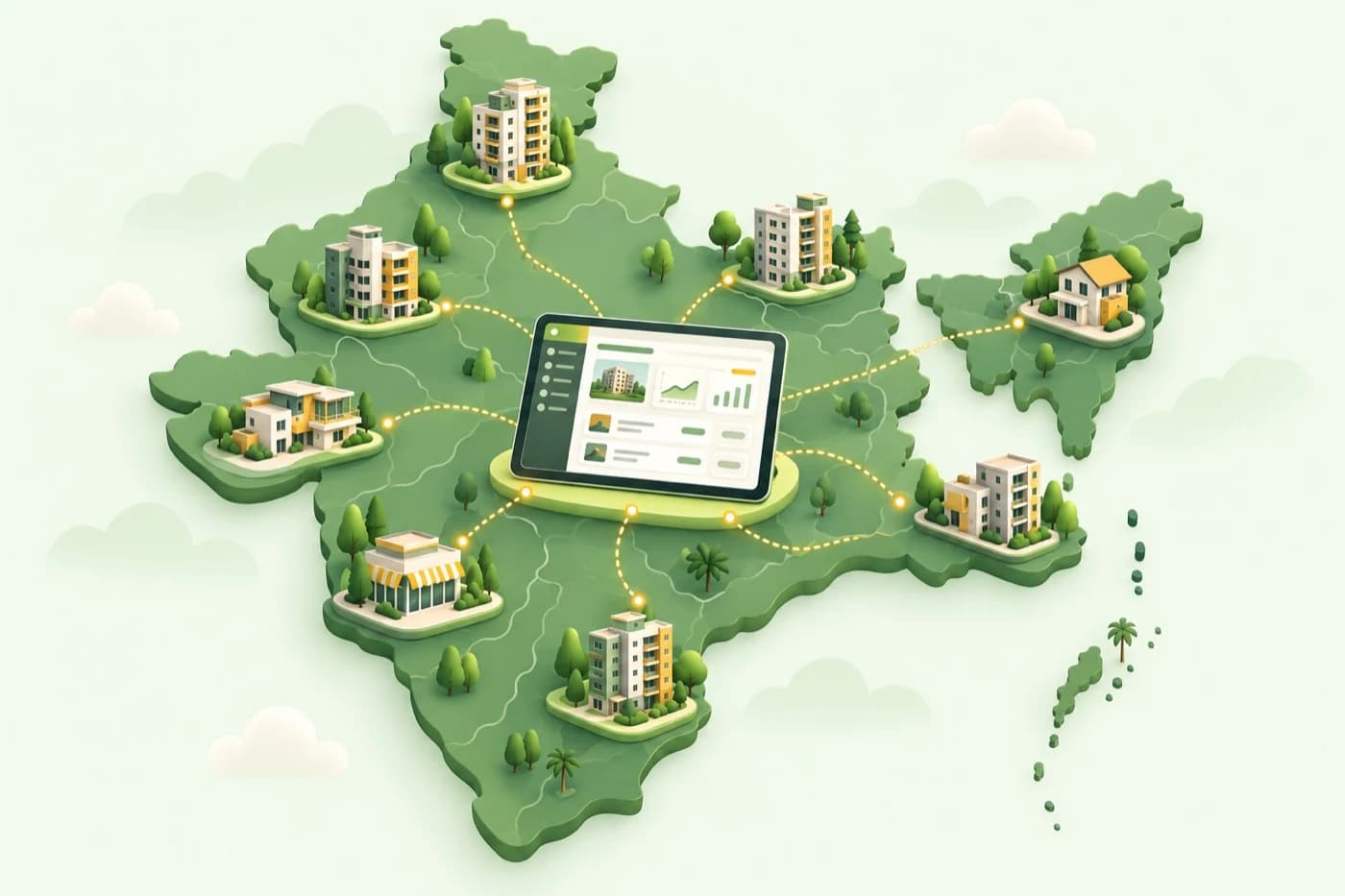
Instead of a list of tenants, you see your portfolio: every property with its occupancy, rent roll, pending dues and open maintenance requests. Click into a property to see its units; click into a unit to see its tenant, agreement and payment history.
2. Unit and bed maps
For apartments, a visual unit map shows which units are occupied, on notice or vacant. For PG and co-living, the same idea works at the bed level — which beds are filled, which are due for rent, which open up next month.
3. Support for every property type
| Property type | What it needs |
|---|---|
| Residential flat | 11-month agreements, deposit tracking, escalations |
| Villa / independent house | Single tenant, higher deposits, maintenance vendors |
| PG / co-living | Bed-level billing, food/utility add-ons, frequent move-ins |
| Shop / office | Lock-in periods, GST invoices, longer escalations |
A good app lets you manage all of these side by side without forcing them into one template.
4. Multi-city grouping
Landlords increasingly own across cities — a flat in the hometown, another where they work, an investment property somewhere growing fast. Grouping by city or region lets you compare performance and assign local help.
5. Team roles and permissions
This is the feature that makes growth possible. You can invite:
- A caretaker who logs maintenance but never sees payouts
- A property manager who handles tenants and collections for specific buildings
- An accountant or CA with read-only access to ledgers and expenses
Everyone works from the same data, and you keep control.
6. Consolidated and per-property reporting
You finally see which property truly performs. A flat with high rent but constant repairs may earn less than a modest one with a reliable tenant. Consolidated reports — and owner statements if you manage property for others — come out in a click.
When evaluating an app, add two very different properties during the demo — say, a flat and a PG. How naturally the app handles both tells you a lot about whether it will scale with you.
A day in the life: before and after
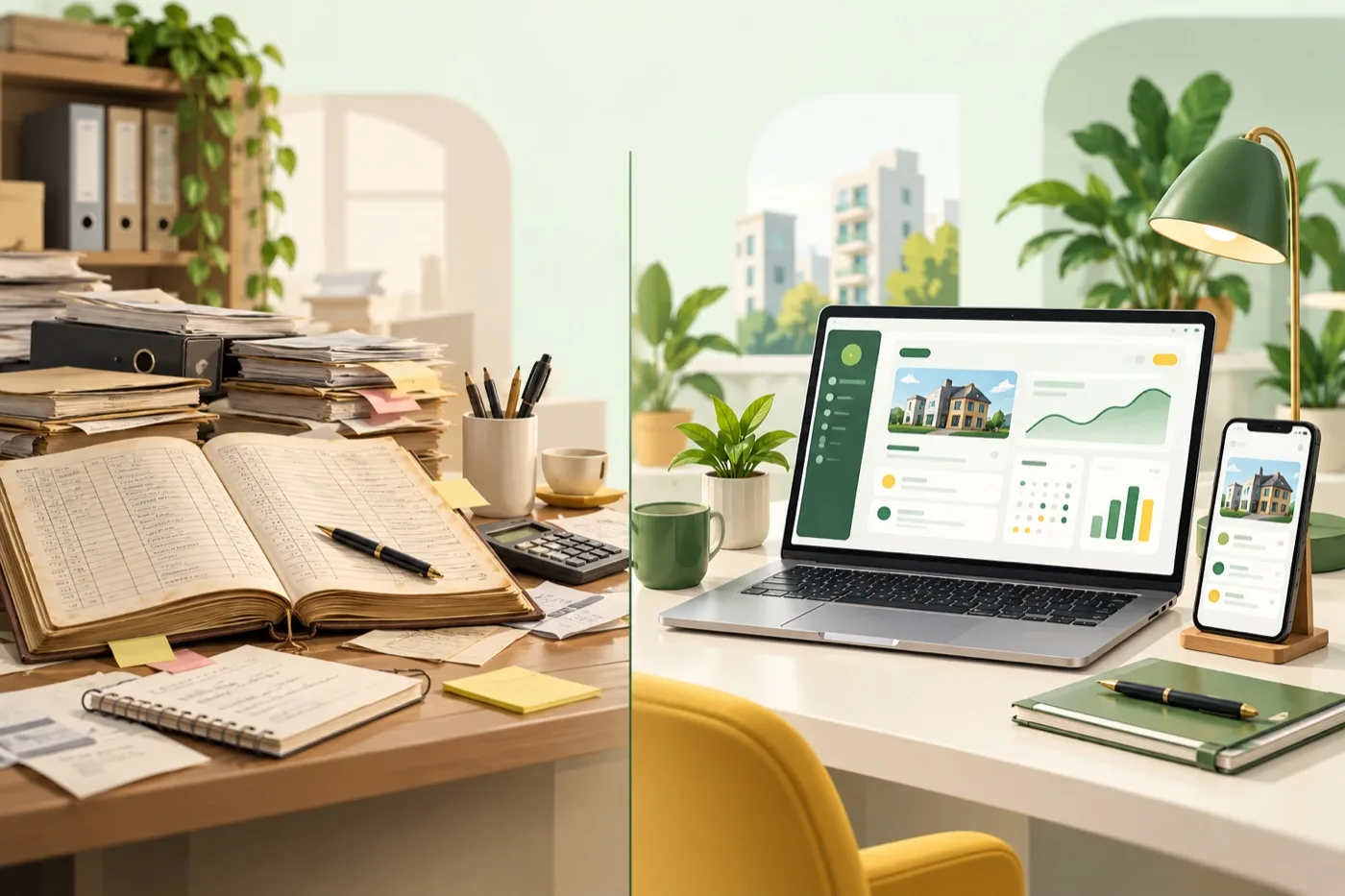
Before: Monday morning starts with checking three WhatsApp groups, two bank apps and a spreadsheet to work out who has paid. A tenant in Pune reports a leak; you call a plumber you found last year. The Bengaluru agreement expired last month and nobody noticed.
After: Monday morning starts with one dashboard: 92% collected, two pending with reminders already sent, one open maintenance ticket assigned to your caretaker, and an alert that the Bengaluru agreement renews in 45 days.
What to look for in a multi-property rental app in India
- Portfolio, property, unit and bed-level views
- UPI collection and automatic receipts for every tenant
- WhatsApp and SMS reminders on a schedule
- Role-based access for family and staff
- Document vault with expiry alerts
- Per-property expenses and profit
- GST invoicing for commercial units
- Rupee pricing that scales per property
Managing properties across buildings or cities?
Tell us about your portfolio and our team will show you how it looks inside RentDedo — every property, unit and tenant on one screen.
Where RentDedo fits
RentDedo is designed for multi-property landlords and managers in India: a portfolio dashboard, unit and bed maps, any property type, multi-city grouping, team roles, and consolidated reports — with UPI collection and WhatsApp reminders built in.
If your rentals have outgrown the notebook, book a free demo and see your entire portfolio in one place.